About the author : Diana

For many years, companies treated branding as a surface-level exercise – logos, color palettes, typography, and brand guidelines neatly tucked away in a PDF. Performance marketing, SEO, and social media lived in separate silos, often managed by different teams with different objectives. This is an approach that no longer works.
As a function of our digital-first economy, today, branding is not just how a company looks – it’s how it communicates, how it shows up across channels, and how consistently it delivers value at every touchpoint. From paid ads and search engine results to landing pages, email campaigns, and social media feeds, cohesive branding is the connective tissue that turns visibility into trust and trust into conversions.
Businesses that understand this shift are seeing measurable results: higher conversion rates, stronger customer loyalty, and lower acquisition costs. Those that don’t often struggle with fragmented messaging, inefficient campaigns, and diminishing returns on their marketing spend.
The reason for this shift is simple: buyers no longer experience brands in linear funnels. They move fluidly between platforms, devices, and moments of intent, forming perceptions long before they ever speak to a sales team. When each interaction feels disconnected – or worse, contradictory – it erodes confidence and creates friction that competitors are quick to exploit.
Conversely, when brand identity, tone, and value propositions are aligned across performance channels, every marketing dollar works harder. A cohesive brand reinforces recognition in search results, strengthens recall in paid campaigns, and creates emotional continuity from first impression to final conversion. Over time, this consistency compounds, lowering the cost of acquisition while increasing lifetime value.
As such, branding becomes a growth lever rather than a creative afterthought. It informs how campaigns are structured, how content is optimized for search, how social narratives are built, and how trust is established at scale. The most successful organizations no longer ask whether branding impacts performance – they design their performance strategies around it.
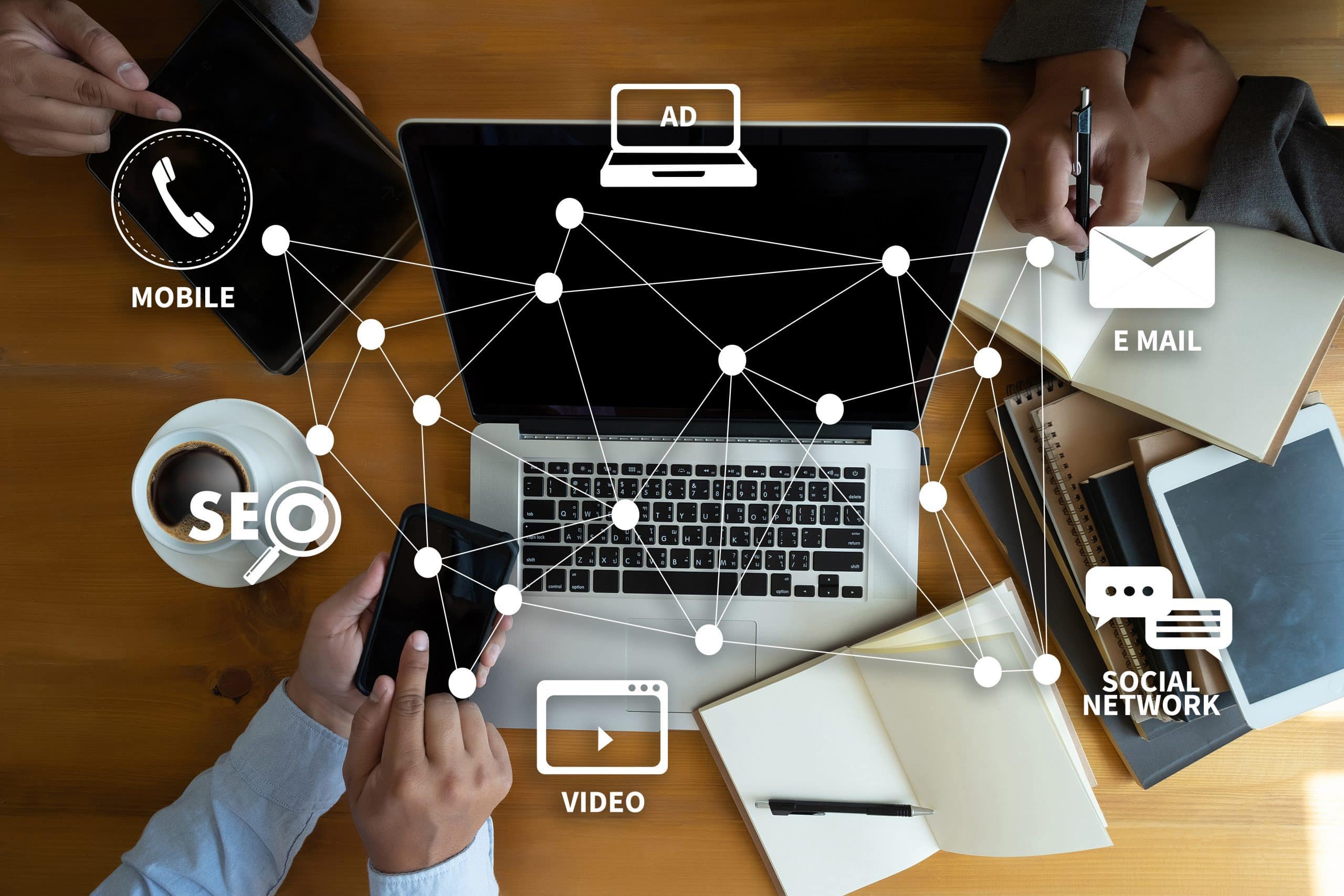
This article will address how cohesive branding connects performance marketing, SEO, and social media into a unified growth engine; why consistency across channels directly influences trust and conversion rates; and how businesses can break down silos to build brand systems that drive measurable, long-term results.
Branding Has Evolved Beyond Visual Identity
Modern branding is behavioral and experiential. It encompasses tone of voice, messaging priorities, value propositions, customer experience, and even how a brand responds to feedback or handles friction in the buyer journey.
A strong brand today answers key questions consistently across every channel:
- Who are we?
- Who do we serve?
- What problem do we solve better than anyone else?
- Why should customers trust us?
When these answers are clear and aligned, marketing efforts reinforce one another. When they’re not, even well-funded campaigns struggle to convert.
This evolution is largely driven by customer behavior. Buyers are more informed, more discerning, more skeptical, and they’re exposed to more marketing messages than ever before. They don’t move through a linear funnel; they jump between search, social, reviews, websites, and recommendations. In that environment, inconsistency can be costly.
Cohesive Branding: the Foundation of Performance Marketing
Performance marketing is often framed as purely data-driven – click-through rates, cost per acquisition, return on ad spend. While metrics matter, performance does not exist in a vacuum. Ads that convert well are rarely just “well-targeted”; they are aligned with a brand narrative that feels credible and familiar.
When branding is cohesive:
- Ad creative reflects the same messaging users see on landing pages
- Value propositions are reinforced rather than reintroduced
- Calls to action feel natural, not transactional
- The brand voice builds recognition over time, reducing friction
Conversely, when branding is fragmented, users experience cognitive dissonance. An ad may promise innovation, but the landing page feels generic. A paid search result may emphasize trust, while the website copy feels aggressive or unclear. Each disconnect increases hesitation – and hesitation kills conversions.
Unified branding shortens the trust-building process. Users don’t need to “re-evaluate” the brand at every step; familiarity accelerates decision-making.
SEO Is Not Just About Keywords – It’s About Brand Authority
Search engine optimization has also evolved. While technical optimization and keyword strategy remain essential, Google increasingly prioritizes signals related to authority, trust, and relevance. These signals are deeply intertwined with branding.
Strong brands tend to:
- Earn higher click-through rates in search results
- Attract more backlinks naturally
- Generate branded search traffic
- Keep users engaged longer on-site
- Build topical authority over time
When content aligns with a clear brand position, it becomes more than keyword coverage – it becomes a resource. Blog posts, guides, and landing pages that reflect a consistent point of view are more likely to be shared, referenced, and remembered.
In contrast, SEO content created in isolation often feels interchangeable. It may rank temporarily, but it rarely builds long-term equity or drives meaningful conversions.
Cohesive branding ensures that SEO efforts don’t just attract traffic – they attract the right traffic and guide it toward action.
Social Media as Brand Amplification
While social media has also evolved radically as a marketing tool, it is still often treated as a volume game: more posts, more platforms, more impressions. But reach without resonance does little to drive conversions.
On social platforms, branding is not just visual consistency – it’s narrative consistency. Audiences follow brands that feel authentic, recognizable, and aligned with their values. That recognition comes from repeated exposure to a coherent message, not one-off viral attempts.
When branding is unified across social channels:
- Content reinforces the same core themes and values
- Visual identity builds instant recognition in crowded feeds
- Tone of voice feels human and consistent
- Calls to action align with broader marketing goals
This consistency builds trust over time. Followers may not convert immediately, but when they encounter a paid ad, a search result, or a referral later, the brand already feels familiar. That familiarity dramatically improves conversion likelihood.
Trust as the Ultimate Conversion Multiplier
At the center of cohesive branding is trust. Trust reduces perceived risk, shortens sales cycles, and increases willingness to engage.
Unified brand strategy builds trust in several key ways:
- Consistency: Repetition of clear messaging signals reliability.
- Clarity: A focused value proposition reduces confusion.
- Credibility: Professional, aligned presentation conveys competence.
- Continuity: Seamless experiences across channels feel intentional, not accidental.
Trust doesn’t just improve conversion rates – it improves conversion quality. Users who trust a brand are more likely to become repeat customers, advocates, and long-term revenue drivers.
Lower Acquisition Costs Through Brand Alignment
One of the most overlooked benefits of cohesive branding is cost efficiency. When branding is strong, marketing works harder for every dollar spent.
Unified branding can:
- Improve ad relevance scores, lowering cost per click
- Increase organic conversion rates, reducing reliance on paid traffic
- Boost referral and word-of-mouth traffic
- Shorten onboarding and decision cycles
- Reduce churn by aligning expectations early
In other words, branding doesn’t compete with performance marketing – it amplifies it. Businesses that invest in brand alignment often find they can achieve the same results with less spend, or better results with the same budget.
Breaking Down Silos: Strategy Over Channels
The most successful digital marketing strategies today are not channel-first; they are brand-first. Rather than asking, “How do we optimize this channel?” high-performing teams ask, “How does this channel reinforce our brand and business goals?”
This shift requires alignment across:
- Brand strategy
- Content strategy
- Paid media
- SEO
- Social media
- Conversion optimization
When these disciplines work from a shared foundation, every touchpoint strengthens the next. Marketing becomes cumulative rather than fragmented.
Why Cohesive Branding Is a Competitive Advantage
In crowded markets, features are easy to copy. Pricing is easy to undercut. Branding – when executed holistically – is much harder to replicate.
A cohesive brand:
- Differentiates beyond functionality
- Builds emotional connection
- Creates long-term equity
- Supports sustainable growth
As customer acquisition becomes more expensive and attention more scarce, brands that feel clear, consistent, and credible will continue to outperform those that rely on tactics alone.
Bringing It All Together
As it stands today, branding is no longer just a component of marketing or a box to check off – it’s a strategic framework that connects performance marketing, SEO, and social media into a unified growth engine. When every channel speaks the same language and reinforces the same value, trust compounds, conversions rise, and acquisition costs fall.
Businesses that recognize branding as a living, cross-channel strategy – not a static visual asset – position themselves for stronger results today and greater resilience tomorrow.
If you’re looking to align your brand identity with your digital marketing efforts and turn consistency into measurable growth, reach out to us to learn how a cohesive brand strategy can drive higher conversions, stronger trust, and better ROI across every channel.